
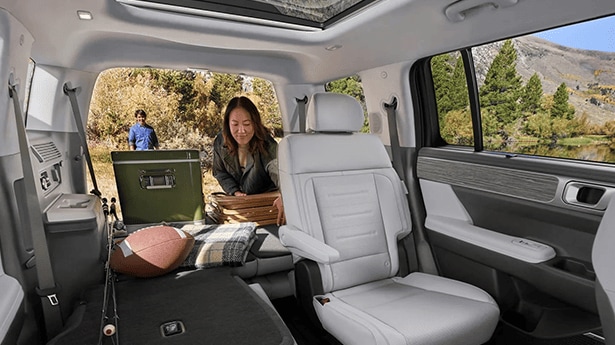
Autumn travel across Ohio brings specific driving challenges that urban commuting rarely reveals. Heavy weekend traffic, sudden rainstorms, and dropping ambient temperatures put added thermal and mechanical stress on your vehicle. Taking a loaded 2026 Hyundai Santa Fe or 3-row Hyundai Palisade on a multi-hour drive means your engine, cooling system, and braking components operate under continuous load. Checking key maintenance items before leaving prevents minor wear from escalating into a highway delay.
Preparing a 2026 Hyundai for long fall road trips requires inspecting critical mechanical systems to handle sudden seasonal rain, fluctuating pavement temperatures, and extended highway driving. A comprehensive preparation strategy focuses on tire tread depth, brake system integrity, battery charge capacity, fluid condition, and wipers. For electric models, verifying charging software, cabin preconditioning, and auxiliary power functionality helps support seamless long-distance performance before heading out on highway journeys.
Drivers departing Dublin for autumn weekend trips rely on consistent vehicle performance across both city streets and high-speed interstate corridors. Verifying cold tire pressures, ensuring headlights and taillights are clean and operational, and checking engine oil clarity form the core of a simple home inspection. For complete peace of mind before a multi-state drive, scheduling an expert walk-around at our service center location on Billingsley Road helps ensure that factory-trained technicians evaluate underbody components, diagnostic trouble codes, and fluid chemistry. You can also reach our service advisors directly by giving our team (614) 782-1029 to discuss specific trip preparation needs.
What Pre-Trip Maintenance Services and Inspections Does Your Hyundai Need Before Football Season?
A thorough pre-trip service inspection evaluates the 12V battery, brake pads and rotors, suspension components, engine oil, and vital fluid levels. These comprehensive checks prevent unexpected mechanical issues during high-speed highway travel and heavy stop-and-go stadium traffic.
Engine oil plays a critical role in cooling and lubricating internal engine components during sustained highway cruising. Over time, engine oil accumulates microscopic debris and loses viscosity, which reduces thermal protection. Fresh synthetic oil combined with an OEM oil filter ensures proper lubrication for the 2.5L engine in the Santa Fe, which delivers up to 20 city / 29 hwy MPG when properly maintained. During the same service visit, technicians check transmission fluid, engine coolant, and power steering fluid levels to guarantee proper operating temperatures under heavy vehicle loads.
Electrical health is equally crucial as autumn temperatures begin to drop. High summer heat accelerates internal battery grid corrosion, but cold weather reveals the damage by placing higher electrical demands on the starter motor. A professional battery test measures Cold Cranking Amps (CCA) and voltage output to confirm your battery can support headlights, seat warmers, cabin climate systems, and mobile device charging without failure.
Professional multi-point inspections typically range from $50 to $150 across the industry, though routine maintenance packages often bundle comprehensive inspections with standard oil and filter services. During a certified inspection, technicians elevate the vehicle to examine drive shafts, steering linkages, constant-velocity (CV) boots, exhaust mountings, and the HTRAC All Wheel Drive transfer case on equipped models. To book your pre-trip evaluation, visit our online service scheduling portal, or explore replacement wiper blades and air filters through our genuine Hyundai parts center.
How Does Tire Tread Depth Affect Wet Braking Distance on Rainy Fall Highways?
Tire tread depth directly controls wet braking performance because deep tread channels evacuate standing water from beneath the tire contact patch. Worn tires with 2/32 inches of tread depth can double wet stopping distances on highways compared to new tires with 10/32 inches of tread depth. Hydroplaning occurs when water builds up in front of the tire faster than the tread grooves can disperse it, causing the tire to ride on a thin film of water and lose traction completely. As tread wears down below 4/32 inches, the volume of water the tire can channel away drops exponentially. At 60 miles per hour on a rain-slicked highway, a vehicle with severely worn tires can take over 300 feet to come to a complete stop, whereas fresh tread allows stopping distances under 170 feet.
Measuring tread depth at home requires only a standard penny or dedicated tread gauge. Insert a penny into several outer and inner tread grooves with Abraham Lincoln's head upside down and facing you. If the top of Lincoln's head remains visible across any section of the tire, the tread depth has dropped to or below 2/32 inches, indicating an urgent need for replacement. Checking for uneven tire wear across the inner and outer shoulders also identifies alignment or suspension issues that compromise high-speed stability.
Ambient temperature drops in early autumn cause tire pressure to fluctuate significantly. For every 10-degree drop in outside temperature, tire inflation pressure decreases by approximately 1 PSI. Underinflated tires generate excessive internal heat during prolonged highway driving, which damages tire sidewalls and reduces fuel economy. Checking tire pressure when the rubber is cold guarantees accurate readings that align with the vehicle manufacturer specifications listed inside the driver side door jamb.
How Do You Prepare a Hyundai EV Like the IONIQ 5 for Game Day Travel and Tailgating?
Preparing a Hyundai electric vehicle for long road trips involves mapping high-speed DC fast charging stops, preconditioning the lithium-ion battery in cold weather, and configuring auxiliary power features. These preparation steps maximize driving range, reduce charge stop durations, and unlock versatile tailgate capabilities.
The 2026 Hyundai IONIQ 5 features an advanced 800V charging architecture that enables ultra-fast charging from 10% to 80% in as little as 20 minutes when connected to a 350 kW DC fast charger. Before embarking on a fall highway trip, setting your destination charger in the onboard navigation system activates automatic battery preconditioning. Preconditioning adjusts the battery temperature into the optimal thermal window prior to arrival, ensuring maximum energy acceptance rates even when outdoor temperatures dip into the 40s or 30s. In cold weather conditions, EVs can experience temporary range reductions between 15% and 30%, making battery preconditioning essential for preserving trip efficiency.
Tailgating setup is simplified by Hyundai Vehicle-to-Load (V2L) capability, which transforms the vehicle into a mobile power source capable of outputting up to 1.9 kW of standard 120V household power. Using the V2L outdoor adapter plugged directly into the charging port or utilizing the second-row interior outlet allows travelers to run flat-screen televisions, slow cookers, electric grills, and portable speakers directly from the high-voltage battery.
Game day travelers preparing an IONIQ 5 frequently ask whether operating Vehicle-to-Load drains the main battery significantly during a long afternoon; in practice, powering standard tailgate appliances for four hours consumes only a tiny fraction of the 84 kWh total capacity. Drivers can set a custom battery discharge limit within the infotainment system, ensuring V2L automatically shuts off if the battery drops to a pre-selected threshold such as 20%, preserving plenty of driving range for the return trip home.
Where Can Hyundai Owners Near Dublin Get Certified Pre-Road Trip Service Before Football Season?
Authorized Hyundai service centers staffed by factory-certified technicians provide factory-grade pre-road trip care using genuine OEM components and specialized diagnostic equipment. Choosing certified service guarantees that all mechanical work meets exact factory specifications and keeps existing warranty coverages fully intact.
Factory-trained technicians utilize proprietary diagnostic tools that interface directly with vehicle control modules to verify system health. This diagnostic equipment checks safety calibration for the Hyundai SmartSense safety suite, including features like Forward Collision-Avoidance Assist, Lane Keeping Assist, and Rear Cross-Traffic Collision-Avoidance Assist. Non-certified repair shops lack specialized Hyundai software tools required to calibrate these advanced driver-assist systems accurately after wheel alignment or bumper service.
For vehicle owners in Lewis Center navigating the busy Route 23 corridor, bringing a vehicle in for certified factory service prior to embarking on multi-state stadium trips offers complete driving confidence. Installing genuine Hyundai brake pads, engine air filters, and wiper blades helps ensure exact physical fitment and noise-free operation. Original equipment components are designed and tested specifically for your model's weight and suspension geometry.
Maintaining complete service records with genuine parts protects your vehicle's long-term value and preserves factory warranty benefits. Original owners enjoy peace of mind standard with the 10-Year / 100,000-Mile Powertrain Limited Warranty, which covers major internal components including the engine block, cylinder head, transmission, and differential assemblies. Utilizing certified service ensures every repair is documented within the national Hyundai service database.
What Common Questions Do Drivers Ask About Pre-Road Trip Maintenance?
Q: Should I have the brakes inspected before football season travel?
A: Inspecting your brake system before long fall road trips is essential for safety, especially when carrying heavy passenger loads or cargo. Factory technicians measure brake pad friction material thickness, inspect steel rotor surfaces for thermal warping or corrosion scoring, and test brake fluid moisture content. Brake pads worn down to 3 millimeters or less require replacement to maintain proper stopping power during sudden highway stops on wet autumn pavement.
Q: What windshield washer fluid should be used for fall and winter road trips?
A: Fall road trips require switching to a cold-weather winter washer fluid formula rated down to -20 degrees Fahrenheit before temperatures dip near freezing. Standard summer washer fluids contain mostly water and freeze upon contact with a cold windshield, blinding the driver and potentially cracking the plastic fluid reservoir or damaging the washer pump. Winter formulas incorporate de-icing alcohols that dissolve frost, road grime, and salt film.
Q: How far in advance of a long trip should pre-road trip service be scheduled?
A: Scheduling a pre-trip service appointment one to two weeks prior to departure provides adequate time to perform a multi-point inspection and complete any recommended maintenance without rushing. Booking early helps improve appointment availability during peak seasonal travel times, allows technicians to order specialized OEM parts if needed, and gives you time to complete a few local test drives before hitting the highway.
Q: What emergency items should be packed in a Hyundai road trip kit?
A: A complete autumn road trip emergency kit includes heavy-duty jumper cables or a portable lithium battery jump pack, a digital tire pressure gauge, a compact 12V tire inflator, a high-lumen flashlight with extra batteries, a comprehensive first-aid kit, bottled water, non-perishable snacks, warm blankets, work gloves, and a cellular power bank. Carrying paper road maps ensures navigation backup when driving through rural areas with limited cellular coverage.
Q: What benefits does Hyundai Roadside Assistance provide during road trips?
A: Covered vehicles benefit from 24/7 emergency roadside support including flat tire changes, battery jump-starts, lockout assistance, emergency fuel delivery, and towing to the nearest authorized service facility. Factory roadside coverage ensures any unexpected roadside emergency is resolved by professional recovery teams familiar with proper Hyundai towing protocols. For immediate assistance, drivers can contact Hyundai Roadside Assistance at (800) 243-7766 or reach out through the Bluelink app.
Prices and MSRP referenced in this article are estimates for informational purposes only and do not constitute an offer to sell. See dealer for complete details. Fuel economy estimates shown may differ from official EPA ratings and should not be relied upon as a guarantee of actual vehicle performance.