
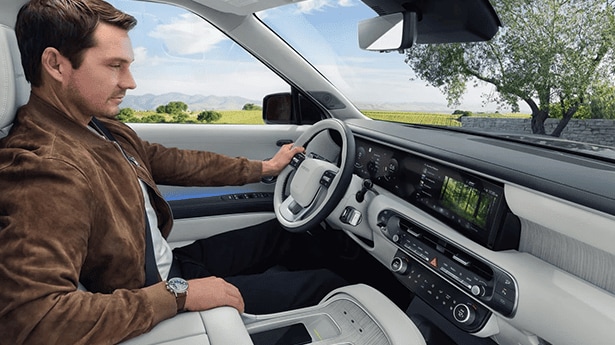
2026 Hyundai hybrid technology maximizes fuel efficiency by pairing a turbocharged gasoline engine with a high-output electric motor integrated directly inside a 6-speed automatic transmission. The system dynamically alternates between electric power, gasoline, or both, while using regenerative braking to capture deceleration energy that standard gas vehicles waste as heat.
Under the hood, vehicles like the 2026 Hyundai Tucson Hybrid pair a 1.6-liter turbocharged engine with an electric motor to produce a combined 231 hp. Rather than utilizing a continuously variable transmission (CVT), Hyundai uses a Transmission-Mounted Electric Device paired with a conventional six-speed automatic gearbox. This architecture allows the electric motor to supply immediate low-end torque while keeping the internal combustion engine running within its most efficient operating range. The hybrid control unit continuously monitors throttle input, vehicle speed, and battery charge to select the most efficient driving mode without requiring any input from the driver.
For commuters in Dublin driving along the Scioto River corridor or navigating daily traffic on I-270, this hybrid setup delivers immediate pedal response alongside remarkable fuel economy. If you are ready to explore our current lineup of hybrid sedans and SUVs, give our sales team a quick call or visit our showroom address on Billingsley Road to take a test drive.
How Much Money Can You Save Driving a Hyundai Hybrid Compared to a Gas Model?
Driving a Hyundai hybrid typically saves between $500 and $1,000 per year in fuel costs compared to a standard gas-powered car, assuming 15,000 annual miles of mixed city and highway driving. The exact financial return depends on your daily commute and local fuel prices, but the efficiency gap between hybrid and non-hybrid models creates substantial savings over time.
Consider the 2026 Hyundai Santa Fe Hybrid, which earns an EPA-estimated 37 mpg city in front-wheel drive form. By comparison, the non-hybrid Santa Fe powered by a 2.5-liter turbocharged engine earns 20 mpg city. That creates a 17-mpg difference in city traffic. Over five years of ownership, cutting fuel consumption by nearly half in urban traffic environments keeps thousands of dollars in your pocket.
For maximum fuel economy, the 2026 Hyundai Elantra Hybrid Blue sedan achieves an EPA-estimated 51 mpg combined. Even in higher trims like the Limited, the Elantra Hybrid achieves 50 mpg combined, drastically cutting monthly fuel expenses for high-mileage drivers. You can explore our selection of new Hyundai hybrid vehicles or browse our pre-owned vehicle inventory to find an efficient model that aligns with your household budget.
When Does a Hyundai Hybrid System Save the Most Fuel on Commutes?
A Hyundai hybrid system delivers its highest fuel savings during stop-and-go city driving and heavy traffic slowdowns where frequent braking allows the electric motor to take over the workload. Standard gas engines idle continuously in bumper-to-bumper traffic, burning gasoline without moving the vehicle forward.
In contrast, Hyundai hybrids utilize auto stop-start functionality to shut off the gas engine completely when brought to a standstill. As traffic slows, the regenerative braking system reverses the electric motor to act as a generator, capturing kinetic energy and converting it into electrical power stored in the high-voltage battery. When traffic resumes, the electric motor accelerates the vehicle from a complete stop using stored battery energy, delaying gasoline engine engagement until higher speeds are reached.
Drivers commuting from Powell toward metropolitan business hubs encounter fluctuating traffic patterns that allow regenerative braking to continuously replenish the battery pack. Hyundai's thermal management system continuously regulates engine coolant temperatures while the vehicle operates in electric mode. This prevents engine cool-down issues, ensuring the internal combustion engine stays warm and ready to re-engage smoothly when extra passing power is needed. Check out our certified pre-owned Hyundai inventory to find factory-backed hybrid models engineered for peak commuter efficiency.
Which Drivers and Commutes Benefit Most From Hyundai Hybrid Models?
Suburban commuters facing congested highway corridors, busy families managing daily school drop-offs and weekend sports schedules, and high-mileage drivers reap the greatest financial rewards from Hyundai hybrid technology. Selecting the right model ensures you get the ideal balance of passenger space, all-weather traction, and efficiency.
Solo commuters prioritizing maximum fuel economy will find the 2026 Hyundai Elantra Hybrid ideal, offering 50 mpg combined in Limited trim along with advanced driver-assist features and an intuitive infotainment system. Small families requiring cargo room and all-weather confidence benefit from the 2026 Hyundai Tucson Hybrid, which delivers 36 mpg city alongside standard all-wheel drive and a spacious cabin.
For larger households, the three-row 2026 Hyundai Santa Fe Hybrid pairs 232 hp with a 17.7-gallon fuel tank, providing an extended total driving range that minimizes fuel stops on long family road trips. Families test-driving the Santa Fe Hybrid on our lot usually ask about third-row legroom and cargo space before they ask about fuel economy, but once they compare the EPA ratings side by side with gas-only SUVs, the long-term value becomes clear. If you are planning to upgrade your family vehicle, our team can help you value your trade-in online in just a few minutes.
Common Questions About Hyundai Hybrid Fuel Savings and Performance
Q: Does driving in electric vehicle mode cause engine cool-down issues when the gas engine restarts?
No. Hyundai's thermal management system actively monitors engine coolant temperatures while the vehicle operates in electric mode. This keeps the internal combustion engine at an optimal operating temperature, allowing it to engage instantly and smoothly without power hesitation or cold-start engine stress.
Q: Do Hyundai hybrid vehicles require a plug or home charging station?
No. Standard Hyundai hybrid models like the Tucson Hybrid, Santa Fe Hybrid, and Elantra Hybrid are self-charging hybrid electric vehicles. The high-voltage lithium-ion polymer battery recharges automatically through regenerative braking and energy generated by the gasoline engine while driving.
Q: How does Hyundai's hybrid transmission differ from competitors using CVTs?
Hyundai integrates a Transmission-Mounted Electric Device directly into a 6-speed automatic transmission rather than using a continuously variable transmission (CVT). This setup delivers crisp, traditional gear shifts and natural engine response while maintaining high fuel economy.
Q: What warranty coverage protects the hybrid battery and powertrain?
Every new Hyundai hybrid purchased at our dealership comes with a 10-Year/100,000-Mile Powertrain Limited Warranty. This coverage includes explicit protection for the high-voltage hybrid battery pack, electric motor, and hybrid control unit for original owners.
Q: Is a Hyundai hybrid still fuel-efficient on open highway trips?
Yes. While hybrids achieve their largest percentage gains in city traffic, models like the Tucson Hybrid still achieve 37 mpg highway by using electric motor assist during cruising speeds and highway passing maneuvers.
Prices and MSRP referenced in this article are estimates for informational purposes only and do not constitute an offer to sell. See dealer for complete details. Fuel economy estimates shown may differ from official EPA ratings and should not be relied upon as a guarantee of actual vehicle performance.