

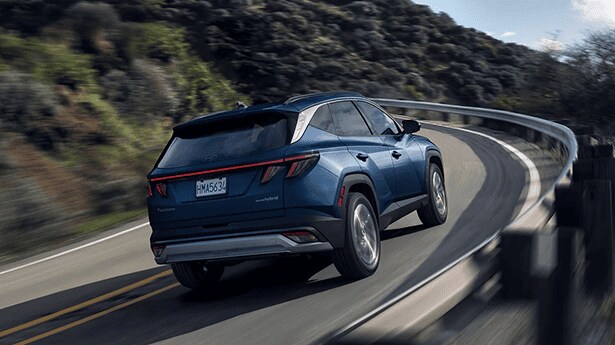
Deciding if a hybrid SUV is worth the investment often comes down to how you use your vehicle for daily transit and weekend errands. For many families in Dublin, the appeal lies in the balance of substantial fuel savings without sacrificing the versatility of a larger cabin. A hybrid powertrain excels in the frequent stop-and-go traffic found near the historic district or during school drop-offs, where the electric motor handles low-speed maneuvers and reduces the workload on the gasoline engine.
The value proposition is especially strong for those with consistent local drives. While traditional gasoline engines are least efficient in heavy traffic, hybrids thrive by capturing energy through regenerative braking. If you are currently driving an older, gas-heavy vehicle, our team can help you value your trade-in to see how much equity you can apply toward a more efficient model. This initial step often makes the transition to a hybrid more budget-friendly than shoppers first expect.
Beyond the pump, modern hybrids offer a smoother, quieter driving experience that fits the professional and family-oriented lifestyle of central Ohio. If you have questions about how these systems perform during a typical suburban commute, give us a call at (614) 782-1029 to speak with a specialist. We are conveniently located for shoppers throughout the area, and you can find our showroom address online to plan a visit and experience these vehicles firsthand.
Analyzing the Upfront Cost Premium and Fuel Savings Break-Even Point
A common question we hear from research-driven buyers involves the price gap between gasoline and hybrid models. Typically, a hybrid SUV carries an upfront premium of about $2,000 to $4,000 over its gas-only counterpart. For example, the 2026 Hyundai Tucson Hybrid Limited features a starting MSRP of $42,075 and comes standard with all wheel drive. While this initial cost is higher, the long-term math often favors the hybrid for drivers who plan to keep their vehicle for several years.
Pricing
| Feature | Available |
|---|---|
| Starting MSRP | $42,075 |
Engine & Performance
| Feature | Standard across all trims |
|---|---|
| Drivetrain | all wheel drive |
The break-even point is largely dictated by your annual mileage. Drivers who exceed 15,000 miles per year in Columbus traffic will generally recoup the cost difference through fuel savings much faster than low-mileage drivers. Because hybrids like the 2026 Hyundai Tucson Hybrid Blue SE can achieve up to 38 MPG combined, the savings at the pump add up quickly compared to traditional SUVs that might only reach the mid-20s in similar conditions.
For those focused on maximizing value, exploring our pre-owned vehicle selection can be a smart way to find hybrid technology at a lower entry price. Whether you choose a brand-new model or a certified pre-owned option, the combination of high fuel efficiency and strong resale demand makes these vehicles a practical financial choice for busy dual-income households.
Standard Hybrid vs Plug-In Hybrid (PHEV) SUV Technology
Understanding the distinction between a standard hybrid and a Plug-in Hybrid (PHEV) is essential for matching a vehicle to your specific lifestyle. A standard hybrid, like the 2026 Hyundai Santa Fe Hybrid, uses a 1.6L 4cyl Turbo gas/electric hybrid engine and a small battery that never needs to be plugged in. The system automatically manages the transition between gas and electric power, making it a "set it and forget it" solution for families who want better efficiency without changing their refueling habits.
In contrast, a Plug-in Hybrid like the 2026 Hyundai Tucson Plug-in Hybrid features a larger battery that provides a dedicated all-electric driving range. This model offers an EPA-estimated 32 miles of all-electric range, which is often enough to cover a full day of commuting in the suburbs without using a single drop of gasoline. Once the electric range is exhausted, the vehicle operates as a conventional hybrid, delivering an EPA-estimated 35 mpg combined.
The choice often depends on your access to charging. If you have a garage with a standard outlet, a PHEV allows you to wake up every morning with a "full tank" of electricity. However, for those who prefer the simplicity of traditional refueling but want to see their average fuel economy climb into the mid-30s, the standard hybrid remains the most popular and accessible choice for central Ohio drivers.
Long-Term Reliability, Battery Warranties, and Resale Performance
Reliability is a top priority for families who need a dependable vehicle for the long haul. Modern hybrid batteries are engineered to last the life of the vehicle, often performing well beyond the 100,000-mile mark. To provide total peace of mind, every new hybrid we sell includes a 10-year / 100,000-mile Powertrain Limited Warranty that covers major components like the engine and transmission, alongside specific coverage for the hybrid battery system.
Warranty
Factory warranty coverage
| Coverage | Duration |
|---|---|
| Basic | 5 years / 60,000 miles (New Vehicle Limited Warranty) |
| Powertrain | 10 years / 100,000 miles (Powertrain Limited Warranty) |
| Corrosion | 7 years / unlimited mileage (Anti-Perforation Limited Warranty) |
| Roadside Assistance | 60 months / unlimited miles (Hyundai Roadside Assistance Program) |
From a sales perspective, hybrids are currently demonstrating exceptional value retention. As fuel prices fluctuate and environmental awareness grows, the demand for efficient SUVs in the secondary market remains high. This means that when it eventually comes time to trade in your vehicle, a hybrid often commands a higher resale price than a comparable gasoline-only model, further offsetting the initial purchase price.
We often see that the "fear of the unknown" regarding battery life is the biggest hurdle for first-time hybrid buyers. However, with the backing of an industry-leading warranty and years of proven real-world performance, these vehicles have become a staple for practical professionals. Choosing a hybrid is not just about the immediate fuel savings; it is a strategic move to secure a vehicle with a lower total cost of ownership over its entire lifespan.
Power, Highway Efficiency, and Towing Capabilities in Central Ohio
There is a persistent myth that choosing a hybrid means sacrificing power, but the technical specs tell a different story. The 2026 Hyundai Tucson Hybrid produces a combined 231 hp and 271 lb-ft of torque, providing brisk acceleration that is often more responsive than base gasoline engines. This extra torque is particularly helpful when merging onto busy highways or navigating the rolling terrain found around Powell.
Fuel Economy
| Feature | Standard across all trims |
|---|---|
| Combined MPG | 36 mpg |
For those who need to haul gear, the hybrid powertrain is more than capable. The 2026 Hyundai Tucson Hybrid Limited can be equipped with a Tow & Go Package for $570, which includes a tow hitch and ball mount kit. This setup allows for light towing duties, such as moving a small utility trailer or a pair of jet skis for a weekend trip. The electric motor provides instant torque from a standstill, making it easier to get a trailer moving compared to some traditional four-cylinder engines.
Highway efficiency also remains impressive. While hybrids are most famous for city savings, models like the 2026 Hyundai Santa Fe Hybrid still achieve up to 34 mpg highway. This ensures that even on long family road trips across Ohio, you are spending less time at rest stops and more time on the road. The combination of all wheel drive and turbocharged hybrid power ensures you have the traction and "get-up-and-go" needed for all four seasons.
Common Questions About Buying and Owning a Hybrid SUV
Q: Do I need to install a special charging station at home for a hybrid SUV?
No, a standard hybrid SUV like the 2026 Hyundai Santa Fe Hybrid does not require any plugging in or external charging. It refuels at any standard gas station just like a traditional car. Only Plug-in Hybrid (PHEV) models require charging to utilize their all-electric range, and even those can be charged using a standard 120V household outlet.
Q: Is maintenance more expensive for a hybrid SUV because it has two power sources?
In many cases, hybrids can actually be less expensive to maintain over time. Because the electric motor handles much of the initial braking through regeneration, the physical brake pads and rotors often last significantly longer than those on a gas car. The gasoline engine also runs less frequently in city traffic, which can reduce wear on internal engine components.
Q: Does the hybrid battery take up a lot of cargo space?
Modern design has largely eliminated this concern. In the 2026 Hyundai Tucson Hybrid, the battery is placed strategically to maintain a spacious about 39 cubic feet of cargo room. You still get the fold-flat seating and utility you expect from a crossover, making it perfectly suited for grocery runs or hauling sports equipment.
Q: How does the hybrid system perform in cold Ohio winters?
While extreme cold can lead to a temporary decrease in fuel efficiency (often between 15% and 30% for the electric components), the vehicle remains completely reliable. Features like the Severe Weather Kit and standard all wheel drive on our hybrid models ensure you have the grip and warmth needed for winter driving.
Q: Are there different trim levels available for hybrid models?
Yes, you can choose from various trims to match your budget and feature preferences. We invite you to browse our new hybrid inventory to see the differences between entry-level efficiency and premium luxury. Once you find the right fit, you can submit a finance application online to streamline your purchase process.
Prices and MSRP referenced in this article are estimates for informational purposes only and do not constitute an offer to sell. See dealer for complete details. Fuel economy estimates shown may differ from official EPA ratings and should not be relied upon as a guarantee of actual vehicle performance.
Categories:
News