
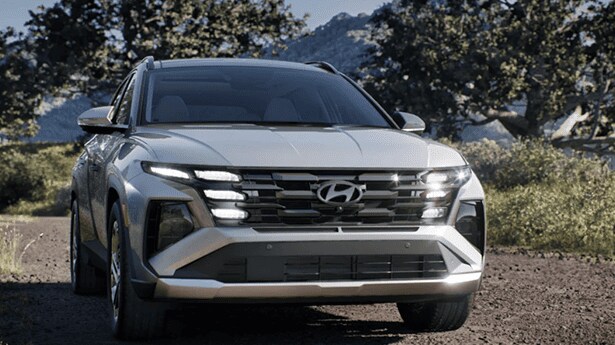
Choosing between these two electrified crossovers comes down to your daily driving routine and access to home charging. Drivers who take frequent weekend road trips or park in unmetered spaces often prefer the seamless, self-charging efficiency of the standard Tucson Hybrid. Meanwhile, commuters who travel within 30 miles of home each day and can plug into a wall outlet overnight can complete most daily errands purely on electric power with the Plug-In Hybrid. Both vehicles feature identical interior space, generous rear cargo volume, and advanced driver-assist features.
The 2026 Hyundai Tucson Hybrid and Tucson Plug-In Hybrid share the same versatile crossover platform and standard HTRAC All-Wheel Drive, but they differ in power, battery size, and charging requirements, which affect their performance and usability. The standard Tucson Hybrid produces 231 hp and up to 38 mpg city / 38 mpg highway without ever needing to be plugged in. The Tucson Plug-In Hybrid increases output to 268 hp and delivers an EPA-estimated 33 miles of electric-only driving range before switching to conventional gas-hybrid operation.
To explore both models in person or take a test drive, visit our showroom at 2441 Billingsley Rd, Columbus, OH 43235 or give our sales team a quick call to check current vehicle availability.
How Do the 2026 Tucson Hybrid and PHEV Compare in Horsepower, Fuel Economy, and Electric Range?
The 2026 Hyundai Tucson Plug-In Hybrid generates 268 hp total system output, giving it a 37-horsepower advantage over the standard Tucson Hybrid's 231 hp. Both models share a 1.6L turbocharged inline four-cylinder engine paired with a SHIFTRONIC® six-speed automatic transmission, generating an identical 271 lb-ft of torque for confident highway merging and passing power.
The main operational differences show up in battery capacity and fuel economy ratings:
- 2026 Hyundai Tucson Hybrid (HEV): Utilizes a compact 1.49-kWh lithium-ion battery that recharges strictly through regenerative braking and engine operation. The entry-level Blue SE HEV AWD trim earns an EPA-estimated 38 mpg city / 38 mpg highway, providing maximum distance between fill-ups with zero charging logistics.
- 2026 Hyundai Tucson Plug-In Hybrid (PHEV): Houses a much larger 13.8-kWh battery pack. It delivers an EPA-estimated 33 miles of zero-emission, all-electric range on a single charge. Once the battery charge drops to a predetermined threshold, the vehicle operates as a traditional hybrid, achieving an EPA-estimated 35 mpg combined on gasoline.
For commuters comparing long-term efficiency, the PHEV offers maximum fuel savings if you charge daily, while the standard Hybrid provides exceptional continuous fuel economy across every trip. If you are exploring various pre-owned options alongside new models, our inventory includes a wide selection of quality pre-owned vehicles to fit different household budgets.
Does the 2026 Hyundai Tucson Hybrid Battery Self-Charge While Driving?
Yes, the 2026 Hyundai Tucson Hybrid battery self-charges continuously while driving using regenerative braking and engine power, requiring no external wall outlet or charging cable. Whenever you ease off the accelerator or apply the brakes, the electric motor reverses direction to function as a generator, capturing kinetic energy that would otherwise be lost as heat and converting it into electrical energy stored in the high-voltage battery.
The vehicle's hybrid control unit manages power delivery automatically without driver intervention. During light acceleration or low-speed coasting, the system can propel the crossover using stored electric power alone. When extra power is needed for climbing hills or accelerating onto busy highway corridors, the 1.6L turbocharged engine engages seamlessly to complement the electric motor.
This automatic charge management makes the standard Tucson Hybrid an ideal choice for drivers who want excellent overall fuel efficiency without adapting to a charging schedule. For shoppers seeking thoroughly tested alternatives with extended factory protection, take a look at our certified pre-owned Hyundai models currently in stock.
Can You Charge the Tucson PHEV with a 120V Outlet and How Long Does Charging Take?
You can charge the 2026 Hyundai Tucson Plug-In Hybrid using a standard 120-volt household wall outlet with the included Level 1 charging cable, which fully recharges the battery in approximately 10 to 12 hours. If you install an upgraded 240-volt Level 2 home charging station, full recharge time drops to approximately 2 hours.
Home charging logistics for the Tucson PHEV fit easily into most daily routines:
- Level 1 Charging (120V Household Outlet): Plugs directly into a dedicated standard three-prong wall socket in your garage or driveway. Plugging the vehicle in overnight allows the battery to replenish completely while you sleep, providing a fresh 33 miles of electric driving range every morning.
- Level 2 Charging (240V Outlet / Wallbox): Utilizes the vehicle's onboard 7.2-kW charger to dramatically speed up power delivery. This setup is ideal for drivers who want to top off their battery between afternoon errands or quick weekend trips.
Because the Tucson PHEV automatically switches to its gas engine when battery reserves are depleted, you never have to worry about finding a public charger during unexpected detour routes or longer highway journeys. If you plan to upgrade from your current vehicle, you can value your trade-in online in just a few minutes to see how much equity you can apply toward your purchase.
Which Tucson Hybrid Option Is Better for Central Ohio Winter Driving and Snow?
Both the 2026 Hyundai Tucson Hybrid and Plug-In Hybrid come standard with Hyundai's electronic HTRAC All-Wheel Drive system, providing outstanding traction and control on snow-covered roads and icy surfaces. The system actively monitors road conditions and wheel slip, redistributing torque between the front and rear axles to maintain directional stability during slippery acceleration and cornering.
While both powertrains handle slick roads with confidence, each offers unique winter features:
- Drive Mode Selection: Both models feature dedicated Drive Modes—including a specialized Snow Mode—that recalibrate throttle response, transmission shift points, and front-to-rear torque splits to prevent wheel spin on packed snow.
- Cabin Pre-Conditioning (PHEV Advantage): The Tucson Plug-In Hybrid allows you to remote-start and warm the cabin using grid power while connected to your home charger. This warms the interior and defrosts the windshield without drawing power from the high-voltage battery or burning gasoline, preserving your full 33 miles of electric range for the drive.
- Cold Weather Efficiency: In sub-freezing temperatures, all electrified vehicles experience a temporary drop in electric efficiency, typically between 15% and 30% on freezing days. The standard Tucson Hybrid manages engine heat quickly to keep the cabin warm, while the PHEV uses its dual heat sources to balance cabin comfort and battery health.
Whether navigating slushy neighborhood streets in Dublin or commuting along major metro highways during a winter storm, both hybrid configurations offer complete peace of mind.
What Is the Towing Capacity and Practical Utility of the 2026 Tucson Hybrid and PHEV?
Both the 2026 Hyundai Tucson Hybrid and Tucson Plug-In Hybrid deliver a maximum towing capacity of 2,000 pounds when properly equipped with trailer brakes, making them equally capable of hauling small utility trailers, personal watercraft, or pop-up campers.
In addition to identical towing limits, both powertrains maintain the versatile interior utility that buyers expect from a midsize crossover:
- Rear Cargo Space: Offers up to 39 cubic feet of cargo volume behind the second row, providing ample room for luggage, sports equipment, or groceries.
- Seating and Storage Flexibility: Features 60/40 split-folding rear seatbacks that fold flat to expand storage space for longer cargo items.
- Hands-Free Convenience: Available trim levels include a hands-free smart liftgate with adjustable height settings for easy loading when your hands are full.
Because Hyundai engineers integrated the hybrid battery beneath the floorboard, choosing either the HEV or PHEV requires zero compromise on passenger legroom or total interior volume.
Common Questions About the 2026 Hyundai Tucson Hybrid Lineup
Q: Does the 2026 Hyundai Tucson Hybrid come standard with all-wheel drive?
Hyundai's HTRAC All-Wheel Drive system is a standard feature across all 2026 Tucson Hybrid and Plug-In Hybrid models, enhancing traction in diverse driving conditions. Unlike traditional mechanical setups, HTRAC electronically measures traction demands across all four wheels and continuously distributes torque to maximize grip on dry pavement, heavy rain, or winter snow.
Q: What warranty coverage protects the hybrid components?
Every new Tucson Hybrid and PHEV is backed by Hyundai's 10-year/100,000-mile Powertrain Limited Warranty, along with a dedicated 10-year/100,000-mile High-Voltage Battery Warranty. This coverage protects core hybrid elements—including the electric motor, battery pack, and power control unit—against manufacturing defects.
Q: How does the PHEV drive after the electric battery is empty?
When the PHEV depletes its 33 miles of electric range, it automatically transitions into standard hybrid mode. The vehicle operates seamlessly using its 1.6L turbo engine and regenerative electric motor, delivering an EPA-estimated 35 mpg combined without any drop in driving performance.
Prices and MSRP referenced in this article are estimates for informational purposes only and do not constitute an offer to sell. See dealer for complete details. Fuel economy estimates shown may differ from official EPA ratings and should not be relied upon as a guarantee of actual vehicle performance.