
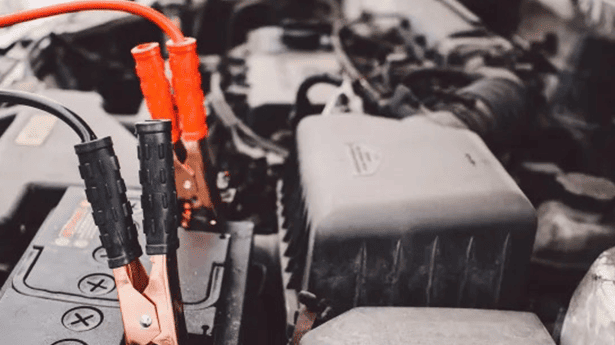
When ambient temperatures drop across central Ohio, chemical activity inside liquid electrolyte batteries decelerates significantly. A 12-volt battery relies on a chemical reaction between lead plates and sulfuric acid to generate electrical current. As temperatures plummet, this reaction slows down, limiting the surge of amperage required to turn over a cold engine. At the same time, engine oil becomes viscous and heavy, requiring substantially more electrical power from the starter motor to crank the crankshaft.
At 32°F, a standard vehicle battery loses approximately 35% of its starting capacity, while sub-zero temperatures can reduce available power by up to 60%. Freezing weather thickens engine oil, creating additional mechanical resistance while slowing the internal chemical reactions within the battery. Consequently, an aging 12-volt battery faces higher electrical demands precisely when its energy output is most restricted during an Ohio cold snap.
Winter driving conditions also compound electrical loads. Defrosters, cabin heater fans, wiper blades, and heated seats demand continuous high-amp output from the charging system immediately upon startup. On vehicles equipped with short-trip driving patterns, the alternator may not have adequate time to restore the energy depleted during a hard cold start.
Whether operating a gasoline SUV like the 2026 Hyundai Tucson equipped with standard all-wheel drive or a commuter sedan, winter weather tests every component of the electrical system. Dublin commuters driving along the Scioto River valley corridor during sub-freezing mornings face prolonged starter engagement if an aging battery cannot deliver rapid voltage. To ensure your vehicle remains reliable throughout the freezing season, our technicians can evaluate your battery health at our Columbus service center location or answer questions directly when you give our team a call at (614) 782-1029.
What Are the Early Signs of a Dying 12V Battery and Why Does Cold Lower CCA Output?
Early indicators of a weak 12-volt battery during cold weather include a sluggish engine crank, flickering interior instruments, dimming headlights at idle, and dashboard low-voltage alerts. Cold temperatures drop a battery's available Cold Cranking Amps because freezing temperatures slow the electrochemical reaction between lead plates and electrolyte fluid, reducing current flow when cranking resistance is highest.
Cold Cranking Amps (CCA) represents the quantity of current a 12-volt battery can deliver at 0°F for 30 seconds while maintaining a minimum voltage threshold. As temperatures fall toward zero, electrolyte fluid within traditional flooded lead-acid batteries thickens. This resistance restricts the movement of ions between battery plates, dropping available CCA output by up to 50% compared to room-temperature operational levels.
12V BATTERY COLD SNAP IMPACT
| Temperature Range | Available Starting Power Capacity |
|---|---|
| 80°F (Optimal) | 100% Output Capacity |
| 32°F (Freezing) | ~65% Output Capacity (35% Capacity Loss) |
| 0°F (Severe Cold) | ~40% Output Capacity (60% Capacity Loss) |
Recognizing warning signs before a complete failure prevents sudden non-start situations in freezing conditions. Our service advisors frequently observe drivers coming in after the first heavy frost noticing a hesitation when pressing the push-button start on their Hyundai Tucson or Santa Fe. Common early warnings include:
- A delayed or dragging starter motor response during initial morning ignition
- Rapid clicking noises coming from the starter solenoid when pressing the start button
- Noticeable dimming of the LED headlamps or ambient cabin lights when idling at intersections
- Illumination of the battery charging system warning light or low-voltage messages on the digital cluster
- Disruption of automated comfort settings, such as slow power-window operation or resetting clock times
Vehicles fitted with Idle Stop & Go tech place extra demands on the 12-volt power supply. When stopping in traffic, the battery must run cabin climate controls, infotainment screens, and safety sensors while preparing to restart the engine instantly upon releasing the brake pedal. When an aging battery loses CCA capacity, the vehicle's onboard diagnostics may disable the auto-stop feature to preserve essential cranking energy. Replacing a worn unit with an original equipment battery from our genuine Hyundai parts center guarantees correct reserve capacity and terminal configuration.
Are AGM Batteries Worth the Extra Cost for Winter Driving in Columbus?
Absorbent Glass Mat (AGM) batteries offer enhanced winter reliability over traditional flooded lead-acid units by delivering higher Cold Cranking Amps, faster recharge acceptance, and superior resistance to internal plate freezing. For drivers navigating prolonged freeze cycles, the durable construction of an AGM battery resists deep-discharge damage caused by heavy accessory electrical demands.
Unlike standard flooded batteries containing free-flowing liquid acid, an AGM battery features fine fiberglass mesh matting that absorbs and holds the electrolyte fluid directly against the lead plates. This spill-proof design creates significantly lower internal electrical resistance, allowing current to flow quickly even in sub-zero temperatures.
Suburban I-270 commuters around Columbus who rely on continuous heater fan usage, rear defrosters, and heated seats experience less voltage drop with AGM technology. Key technical advantages of upgrading to an AGM battery for winter driving include:
- Enhanced Cold Cranking Amps: Higher peak surge current delivers faster engine starts on freezing mornings.
- Superior Recharge Efficiency: Accepts charge from the alternator up to five times faster than conventional batteries, making it ideal for short winter commutes.
- Vibration and Freezing Protection: Absorbed electrolyte cannot freeze and expand like free liquid, preventing internal case cracks and shorted lead plates.
- Extended Cycle Life: Handles repeated deep discharge cycles from advanced driver-assist features and heated accessories without premature capacity loss.
Models equipped with high-output alternators and heavy electrical options benefit directly from AGM chemistry. While the initial investment for an AGM unit is higher than a standard flooded battery, its long-term durability and resistance to winter power loss make it a practical option for central Ohio weather.
How Does Extreme Cold Impact Hyundai EV Range, Charging, and Battery Longevity?
Sub-freezing weather temporarily reduces Hyundai electric vehicle driving range by 15% to 30% on cold days due to increased energy used for cabin heating and slower lithium-ion chemistry. Crucially, extreme cold does not cause permanent high-voltage battery degradation; normal storage capacity and overall range restore automatically once ambient temperatures warm up.
Electric vehicles such as the 2026 Hyundai Ioniq 5 utilize advanced lithium-ion traction battery packs. Lithium ions move between the anode and cathode through a liquid electrolyte solution to store and release energy. In freezing weather, this liquid becomes viscous, increasing internal resistance. This mechanical slowdown temporarily restricts the total power the battery can release and accept, causing an immediate drop in estimated driving range on the instrument cluster display.
Hyundai EV WINTER EFFICIENCY FACTORS
| Operating Condition | Efficiency Impact Profile |
|---|---|
| Moderate Temp (70°F) | 100% Standard EPA Range Benchmark |
| Cold Temp (20°F, Heat Off) | ~12% Temporary Range Loss |
| Cold Temp (20°F, Heat On) | ~30% to 41% Temporary Range Loss |
High-voltage battery charging characteristics also change during severe cold snaps. To protect the internal structure of lithium-ion cells, the vehicle's battery management system automatically limits DC fast charging speeds until the pack reaches a safe internal temperature. Attempting to rapid-charge a frozen lithium-ion pack without prior thermal preparation can result in throttle-back charge rates.
It is important to distinguish between temporary winter range loss and permanent battery damage. Extreme cold slows down chemical reaction speeds, but it does not degrade the internal chemistry long-term. Hyundai protects its high-voltage electric vehicle architectures with a robust thermal management system that actively circulates coolant to balance cell temperatures. Drivers exploring electric mobility options can view current Hyundai vehicle incentives to learn more about advanced winter-ready EV technology.
How Do Hyundai EV Preconditioning, Heat Pumps, and 120V Charging Perform in Sub-Freezing Weather?
Hyundai battery preconditioning warms the high-voltage pack to its optimal thermal window before arriving at a fast charger, significantly shortening winter charge times. When paired with an available heat pump—which reduces winter heating energy loss by 10% to 15% compared to resistive heaters—range loss is minimized, whereas a standard 120V Level 1 outlet lacks sufficient power to precondition both the battery and cabin without drawing from traction storage.
Preconditioning functions by utilizing internal heating elements to raise traction battery temperatures to approximately 70°F prior to charging. When a high-speed charging station is entered into the factory navigation system as a destination, the vehicle automatically initiates preconditioning en route. Arriving at the charger with a warm battery allows the system to immediately accept peak DC fast charging rates, bypassing slow trickle speeds.
Hyundai EV WINTER HEATING & CHARGING
| Component / Tech | Winter Operational Performance |
|---|---|
| Heat Pump System | Recycles component heat; saves 10-15% range |
| Battery Preconditioning | Warms pack en route for maximum fast charge |
| Level 2 240V Home Plug | Full power for simultaneous cabin/pack heat |
| Level 1 120V Home Plug | Limited amperage; may pull battery reserve |
Cabin heating efficiency plays a primary role in winter range preservation. Traditional electric resistive heaters function like a toaster, drawing substantial kilowatt-hours directly from the high-voltage pack to generate heat. In contrast, Hyundai's heat pump system operates like a reverse air conditioner:
- It collects waste heat generated by electric drive motors, onboard power electronics, and inverter modules.
- It compresses this waste heat to elevate its temperature.
- It circulates warmed air into the passenger compartment, using significantly less battery energy than resistive heating.
For home charging, charger voltage determines preconditioning performance. A standard 120V Level 1 trickle outlet delivers limited power amperage. When attempting to precondition the cabin and warm the battery simultaneously on a 120V connection, the power draw exceeds the outlet's output capacity, causing the vehicle to pull supplemental power directly from the high-voltage battery. Upgrading to a 240V Level 2 home charging setup ensures the vehicle draws warm-up power entirely from the electrical grid, preserving 100% of state-of-charge capacity for departure.
Frequently Asked Questions About Hyundai Winter Battery Maintenance
Q: How often should a 12-volt Hyundai battery be tested during winter months?
A professional conductance battery test should be performed at least once before winter sets in, and again during mid-winter service visits. Testing evaluates both resting voltage and available Cold Cranking Amps under simulated load. Because cold weather can cause marginal batteries to fail without warning, pre-season testing identifies internal plate degradation before sub-zero temperatures leave you stranded. Owners can schedule a diagnostic check through our online service scheduling portal.
Q: Will using heated seats and steering wheels drain my 12-volt battery while driving?
Heated accessories draw electrical current from the alternator while the engine is running, rather than draining the 12-volt battery directly. However, running seat heaters, defrosters, and cabin fans simultaneously during short trips can prevent the alternator from fully restoring the battery's charge. To protect battery health, turn off auxiliary seat heaters once the cabin reaches a comfortable temperature during short winter drives.
Q: Can a completely frozen 12-volt battery be safely jump-started?
A frozen 12-volt battery should never be jump-started. Freezing temperatures can cause electrolyte fluid in a discharged battery to freeze solid, expanding and bowing the internal lead plates or cracking the outer plastic casing. Attempting to jump-start a frozen battery can cause an internal short circuit or explosion. A frozen battery must be brought into a warm environment and thawed completely before testing or attempting a charge.
Q: Does Hyundai warranty coverage protect high-voltage EV batteries in cold weather?
Hyundai covers high-voltage electric vehicle traction batteries with a 10-Year / 100,000-Mile Powertrain Limited Warranty that protects against manufacturing defects and excessive capacity loss for original owners. While temporary range reduction due to freezing temperatures is a normal physical property of lithium-ion chemistry, permanent capacity loss beyond factory allowances is covered under warranty guidelines. You can confirm specific coverage details by giving our staff a call at (614) 782-1029.
Q: Why does public DC fast charging take longer at charging stations during Ohio cold snaps?
Public fast chargers operate slower in freezing temperatures because the vehicle's battery management system actively throttles incoming current to prevent lithium plating within cold battery cells. Until the pack reaches its optimal thermal window, the charge rate remains restricted. Utilizing factory navigation to precondition the battery prior to arriving at a fast charger ensures faster energy transfer. For driving directions to local charging resources, check our service center directions.
Prices and MSRP referenced in this article are estimates for informational purposes only and do not constitute an offer to sell. See dealer for complete details. Fuel economy estimates shown may differ from official EPA ratings and should not be relied upon as a guarantee of actual vehicle performance.