
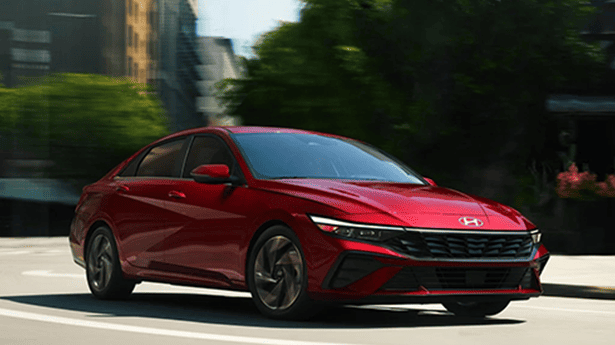
Modern Hyundai vehicles typically deliver a useful lifespan between 200,000 and 250,000 miles or roughly 13 to 17 years when maintained according to factory recommendations. Structural unibody construction, anti-corrosion chassis treatments, and refined powertrain engineering allow modern models to rank consistently above industry averages in long-term reliability benchmark studies. For drivers evaluating purchase confidence, this structural and mechanical longevity translates directly into lower long-term depreciation and strong resale retention.
When shopping for a long-term vehicle investment, build quality and mechanical endurance represent primary buying criteria. Hyundai vehicles have earned high honors across independent automotive research studies. In the 2025 J.D. Power U.S. Initial Quality Study, Hyundai scored 173 problems per 100 vehicles, placing the brand third overall across the automotive industry. Furthermore, the 2026 J.D. Power U.S. Vehicle Dependability Study, which evaluates three-year-old vehicles in real-world ownership conditions, rated Hyundai at 198 problems per 100 vehicles—ranking the lineup solidly above the industry average. Consumer Reports brand rankings also position Hyundai among the top ten automotive manufacturers nationwide for overall build quality and predicted owner satisfaction.
Our team at Great Lakes Hyundai of Dublin frequently walks car shoppers through these long-term benchmark scores when comparing compact sedans, family crossovers, and electrified SUVs. Choosing a vehicle with proven durability ensures that your monthly financing investment can remain beneficial well after the loan period concludes. Whether navigating daily suburban drives near Scioto River parks in Dublin or embarking on cross-country road trips, modern Hyundai engineering provides dependable performance year after year.
To experience our current lineup firsthand, stop by our Dublin-area showroom at 2441 Billingsley Rd or give our team a quick call at (614) 782-1029 to discuss available models and long-term ownership advantages.
Which Hyundai Engines and Powertrains Deliver Long-Term Durability?
Hyundai Smartstream engine architectures, direct-injection 4-cylinder engines, and multi-port V6 powertrains are engineered to achieve high-mileage longevity with minimal mechanical friction. Advanced internal engine coatings, integrated thermal management systems, and continuously variable valve duration technology significantly reduce internal thermal stress, helping major mechanical assemblies easily cross the 200,000-mile threshold.
Among sedan and compact crossover options, several powertrain configurations stand out for exceptional mechanical stability:
- The 1.6L four-cylinder hybrid powertrain generates 139 hp and 195 lb-ft of torque, paired with a specialized EcoShift six-speed dual-clutch transmission for maximum thermal efficiency and smooth power delivery.
- The high-output 1.6L turbocharged engine produces 201 hp and 195 lb-ft of torque, mated to a fast-shifting SHIFTRONIC automatic transmission for energetic performance without sacrificing structural endurance.
- The standard 2.0L Smartstream engine delivers 147 hp and 132 lb-ft of torque through an efficient Smart Stream IVT (Intelligent Variable Transmission) or Front-wheel drive layout engineered for low operational wear during city driving.
- The performance-oriented 2.0L turbocharged engine found in N models generates up to 286 hp and 289 lb-ft of torque, matched with either a precision manual 6-speed or an automatic 8-speed wet dual-clutch transmission designed to handle increased thermal loads.
Our sales advisors observe that long-term buyers exploring our pre-owned vehicle inventory frequently inquire about powertrain durability on models with 80,000 miles or more. Real-world owner records show modern Hyundai four-cylinder engines routinely reaching 100,000 miles and beyond with zero major mechanical repairs when routine oil changes and filter replacements are performed on schedule. Hybrid variants also benefit from regenerative braking systems that reduce mechanical wear on physical brake pads and rotors, extending the life of key stopping components.
Engine & Performance
Powertrain specs by trim
| Feature | 1.6 HEV Blue | 1.6 HEV Limited DCT | 1.6 N Line DCT | 1.6 SEL Sport |
|---|---|---|---|---|
| Engine | 1.6L | 1.6L | 1.6L | 1.6L |
| Horsepower | 139 hp | 139 hp | 201 hp | 139 hp |
| Torque | 195 lb-ft | 195 lb-ft | 195 lb-ft | 195 lb-ft |
| Transmission | EcoShift | EcoShift | SHIFTRONIC | EcoShift |
| Drivetrain | Front-wheel drive | Front-wheel drive | Front-wheel drive | Front-wheel drive |
Engine & Performance (continued)
| Feature | 1.6 SEL Sport Plus | 2.0 Limited IVT | 2.0 N | 2.0 N DCT |
|---|---|---|---|---|
| Engine | 1.6L | 2L | 2L | 2L |
| Horsepower | 139 hp | 147 hp | 286 hp | 286 hp |
| Torque | 195 lb-ft | 132 lb-ft | 289 lb-ft | 289 lb-ft |
| Transmission | EcoShift | Smart Stream IVT | manual 6-speed | automatic 8-speed |
| Drivetrain | Front-wheel drive | Front-wheel drive | Front-wheel drive | Front-wheel drive |
Engine & Performance (continued)
| Feature | 2.0 N TCR | 2.0 N TCR DCT | 2.0 SE IVT | 2.0 SEL Sport IVT |
|---|---|---|---|---|
| Engine | 2L | 2L | 2L | 2L |
| Horsepower | 286 hp | 286 hp | 147 hp | 147 hp |
| Torque | 289 lb-ft | 289 lb-ft | 132 lb-ft | 132 lb-ft |
| Transmission | manual 6-speed | automatic 8-speed | Smart Stream IVT | Smart Stream IVT |
| Drivetrain | Front-wheel drive | Front-wheel drive | Front-wheel drive | Front-wheel drive |
Engine & Performance (continued)
| Feature | 2.0 SEL Sport Plus IVT | 2.0 SEL Sport Premium |
|---|---|---|
| Engine | 2L | 2L |
| Horsepower | 147 hp | 147 hp |
| Torque | 132 lb-ft | 132 lb-ft |
| Transmission | Smart Stream IVT | Smart Stream IVT |
| Drivetrain | Front-wheel drive | Front-wheel drive |
Which Hyundai Models Offer the Lowest Five-Year Depreciation and Highest Resale Value?
The 2026 Hyundai Elantra, Tucson, Santa Fe, and Palisade demonstrate some of the strongest resale value retention rates in their respective vehicle segments, depreciating at a significantly slower rate over a five-year ownership window than many class competitors. Strong entry-level pricing paired with comprehensive factory warranty protection protects pre-owned market demand, ensuring high trade-in valuations when owners decide to upgrade.
Initial purchase price plays a critical role in establishing a favorable depreciation curve. For instance, the 2026 Hyundai Elantra 2.0 SE IVT features a base MSRP starting at 22,625,makingitoneofthemostcost-effectivecompactsedanstoownovertime.Mid-tierconfigurationslikethe2.0SELSportIVTat23,750 MSRP and the fuel-efficient 1.6 HEV Blue hybrid starting at 25,450MSRPmaintainstrongsecondary-marketvalueduetohighconsumerdemandforefficientcommutingvehicles.Highercrossoversegmentscontinuethisvaluetrend,withthe2026HyundaiTucsonstartingat32,800 MSRP and the versatile 2026 Hyundai Santa Fe starting at $47,600 MSRP.
To protect equity over five years of ownership, smart buyers focus on three key trade-in factors:
- Documented factory service history using genuine Hyundai components.
- Maintaining exterior paint finishes and interior upholstery in clean condition.
- Equipping desirable driver-assist features like Forward Collision-Avoidance Assist and Lane Keeping Assist that remain in high demand among pre-owned car shoppers.
When you are ready to evaluate your current vehicle's market value, you can obtain a fast valuation using our online instant cash offer trade-in tool to see how much equity you can apply toward your next purchase.
How Factory Corrosion Protection Preserves Hyundai Lifespan in Ohio Winters
Hyundai vehicles incorporate extensive underbody protective coatings, zinc-galvanized unibody steel panels, and sealed electrical harness connectors specifically designed to resist road salt corrosion and severe winter weather elements. These factory structural safeguards protect vital frame rails, suspension mounting points, and brake lines from oxidation, preserving both vehicle safety and overall longevity.
During winter months along heavy highway corridors like I-270 in Columbus, road crews frequently apply liquid brine and rock salt treatments that create severe corrosive stress on vehicle undercarriages. Hyundai combat this environmental exposure through several specialized manufacturing processes:
- Electro-deposited primer coats that fully coat hidden unibody frame cavities.
- Molded composite underbody shield panels that deflect salt spray and gravel road debris away from critical exhaust and drivetrain components.
- Rubberized anti-chipping sealants applied along vulnerable lower door rocker panels and wheel well arches.
For drivers operating in cold-winter salt-belt regions, taking advantage of seasonal undercarriage washings and garaging vehicles during extreme freeze cycles further preserves paint clear-coat finishes and underbody steel panels, ensuring your vehicle remains structurally sound well past 150,000 miles.
Frequently Asked Questions About Hyundai Vehicle Lifespan and Reliability
Q: How many miles can a 2026 Hyundai Elantra or Tucson reliably last?
With proper scheduled maintenance, a 2026 Hyundai Elantra or Tucson is engineered to reach between 200,000 and 250,000 miles. Modern Smartstream engines, durable unibody framing, and advanced transmission fluid cooling systems prevent premature wear on major mechanical components. Following factory oil change schedules, air filter replacement intervals, and fluid refresh recommendations ensures your sedan or crossover maintains optimal power delivery and internal engine cleanliness over many years of daily operation.
Q: Are modern Hyundai models expensive to maintain past 100,000 miles?
No, Hyundai vehicles boast below-average long-term maintenance costs compared to the broader automotive industry average. Annual routine maintenance and general repair costs typically average between $470 and $600 for high-mileage models. Widespread availability of affordable genuine replacement parts, standardized diagnostic OBD-II computer architectures, and uncomplicated engine bay layouts keep routine service straightforward and economical for long-term owners.
Q: How do Hyundai hybrid battery packs perform over ten or more years of ownership?
Hyundai hybrid battery systems utilize advanced lithium-ion polymer technology designed for long-term thermal stability and minimal capacity degradation over time. Factory hybrid high-voltage batteries are covered by a dedicated 10-year/100,000-mile hybrid system warranty. Regenerative braking management and automated battery temperature regulation protect cells from extreme heat spikes, ensuring strong hybrid system efficiency and steady battery charge retention past 100,000 miles.
Q: Does driving in cold winter salt-belt conditions significantly shorten a Hyundai vehicle's usable lifespan?
Cold winter weather and road salt do not shorten a Hyundai vehicle's usable mechanical lifespan when simple preventive care measures are taken. Hyundai vehicles feature zinc-galvanized unibody steel construction and composite underbody protective shields designed to isolate frame components from road brine. Rinsing the undercarriage periodically during winter months removes accumulated road salt, keeping frame rails, brake lines, and lower suspension arms corrosion-free for many years.
Explore Durable New and Pre-Owned Hyundai Models at Great Lakes Hyundai
At Great Lakes Hyundai of Dublin, our team is committed to helping you find a reliable, long-lasting vehicle that fits your lifestyle and budget. Whether you are interested in browsing our selection of new Hyundai models, testing out an efficient hybrid sedan, or exploring quality pre-owned options, we offer a transparent buying experience backed by competitive financing and exceptional customer support.
Visit our showroom today at 2441 Billingsley Rd or call our team at (614) 782-1029 to schedule a test drive and experience long-term Hyundai value firsthand.
Prices and MSRP referenced in this article are estimates for informational purposes only and do not constitute an offer to sell. See dealer for complete details. Fuel economy estimates shown may differ from official EPA ratings and should not be relied upon as a guarantee of actual vehicle performance.