
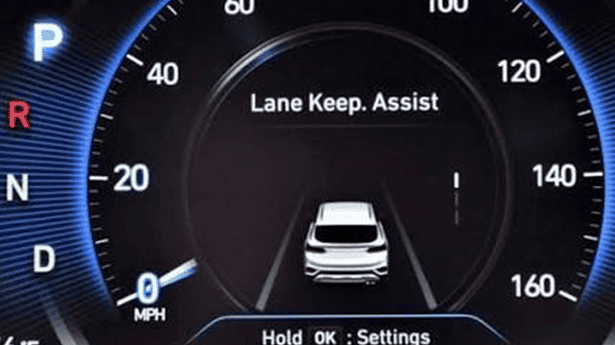
Hyundai driver assistance steering features differ primarily in how and when they intervene: Lane Keeping Assist is a reactive system that warns the driver and gently nudges the vehicle back into its lane if it begins to drift without a turn signal, while Lane Following Assist is a proactive system that continuously centers the vehicle between lane lines using active steering inputs.
Modern vehicles equipped with the Hyundai SmartSense safety suite provide driver-assist features designed to enhance highway confidence and daily driving comfort. Understanding how these systems work together helps car shoppers choose the right trim level and package when exploring new models. Drivers commuting past the Scioto River along I-270 in Dublin will find that these two safety technologies handle distinct driving scenarios. While one acts as a safety backup to prevent unintended lane departures, the other serves as an ongoing steering aid during routine travel.
To make an informed purchase decision, it helps to break down the mechanics, operational thresholds, and integrated highway systems available across the Hyundai lineup. For personalized guidance on feature availability or to test out these driver-assist technologies on the road, visit our showroom location on Billingsley Road or give our sales team a call at (614) 782-1029.
What Is the Main Technical Difference Between Hyundai LKA and LFA?
The main technical difference between Hyundai Lane Keeping Assist (LKA) and Lane Following Assist (LFA) is their core operational logic: LKA uses a front-view windshield camera to monitor lane boundary lines and triggers corrective steering torque only when the vehicle drifts toward a lane marker without signaling, whereas LFA continuously processes visual data from both side markings to calculate the center path and actively guide the steering wheel.
Because Lane Keeping Assist is designed as a reactive driver-assist feature, it remains dormant as long as the vehicle stays safely within its lane. Once the camera detects that a tire is crossing or approaching a solid or dashed lane line without turn signal activation, the system delivers visual and audible alerts on the instrument cluster while applying subtle counter-steering force. This serves as a vital safeguard against driver fatigue, distraction, or momentary loss of focus.
In contrast, Lane Following Assist operates proactively to minimize steering fatigue during long trips or bumper-to-stop traffic. By continuously evaluating both left and right lane boundaries, LFA calculates the precise middle of the lane and sends continuous micro-steering commands to the motor-driven power steering system. Buyers comparing Hyundai models on our showroom floor frequently ask whether these two technologies work independently or as part of a single automated system. While both utilize the windshield-mounted camera sensor inside the Hyundai SmartSense suite, they fulfill different roles and can be enabled individually or simultaneously depending on driver preference.
Shoppers interested in experiencing how these advanced steering features operate firsthand can explore our new Hyundai inventory to find models equipped with the latest safety technology.
At What Speeds and Conditions Do Hyundai LKA and LFA Operate?
Hyundai Lane Keeping Assist operates at speeds above 40 mph when lane markings are clearly visible, while Lane Following Assist operates across a broader speed range from 0 mph up to approximately 90 mph in both stop-and-go city traffic and open highway conditions.
The speed thresholds for these driver-assist features reflect their intended driving environments:
- Lane Keeping Assist: Designed primarily for medium- to high-speed driving on highways, rural routes, and major thoroughfares. Because it activates only above 40 mph, it does not intervene during low-speed municipal maneuvers or parking lot driving.
- Lane Following Assist: Designed for comprehensive utility across all driving environments. Operating from a complete standstill up to 90 mph, LFA assists with steering effort whether you are crawling through rush-hour traffic near the Olentangy River valley area in Columbus or cruising at full highway speeds.
Both systems rely on clear visual input from the front camera. Environmental conditions like heavy rainfall, severe snow accumulation, direct sun glare, worn paint markings, or unpaved road surfaces can temporarily limit system availability. When the camera cannot establish clear lane geometry, a visual indicator on the digital gauge cluster notifies the driver, and steering assistance pauses until clear markings are detected again.
For budget-conscious buyers seeking advanced safety technology, exploring our selection of pre-owned Hyundai vehicles provides access to Hyundai SmartSense features across various model years and trim packages.
How Does Lane Following Assist Compare to Highway Driving Assist?
Lane Following Assist provides lateral steering control to center the car in its lane, whereas Highway Driving Assist (HDA) is a higher-level convenience system that combines Lane Following Assist with Smart Cruise Control with Stop & Go and navigation data to manage steering, speed, and distance on designated highways.
While LFA focuses strictly on holding the midpoint between lane paint lines, Highway Driving Assist creates a more comprehensive driving experience by coordinating multiple Hyundai SmartSense driver-assist features simultaneously:
- Lateral and Longitudinal Control: HDA automatically regulates vehicle velocity and maintains set following distances behind traffic while LFA manages steering input.
- Curve Speed Adaptation: On vehicles equipped with navigation-based HDA, the system utilizes onboard GPS map data to anticipate highway curves and automatically reduces vehicle speed to maintain optimal stability before resuming the set speed.
- Lane Changing Capabilities: Advanced iterations like Highway Driving Assist 2 (HDA 2) add semi-automated lane changes. When the driver activates the turn signal on an open freeway, the system checks radar sensors and guides the vehicle into the adjacent lane when clear.
Vehicles across the Hyundai lineup demonstrate these integrated capabilities. For instance, the 2026 Hyundai Elantra hybrid features a 1.6L engine paired with an EcoShift dual-clutch transmission delivering 51 city / 58 hwy MPG ratings, proving that advanced semi-automated driving convenience and impressive fuel efficiency can coexist in an accessible package.
Shoppers interested in premium tech features with factory warranty coverage can browse our certified pre-owned Hyundai lineup to compare models equipped with HDA and HDA 2.
Are Hyundai Lane Keeping Assist and Lane Following Assist Standard Equipment?
Yes, both Lane Keeping Assist and Lane Following Assist are available on many models in the current Hyundai lineup as core components of the Hyundai SmartSense safety suite.
Popular SUVs and sedans—including the 2026 Hyundai Tucson, 2026 Hyundai Santa Fe, 2026 Hyundai PALISADE, and 2026 Hyundai Elantra—include LKA and LFA as standard features even on entry-level trim configurations. Hyundai prioritizes comprehensive safety technology, ensuring that buyers do not need to upgrade to high-tier packages just to gain essential driver-assist protections. Higher trim levels generally introduce integrated convenience features like Highway Driving Assist, Blind-Spot View Monitor, and Remote Smart Parking Assist.
When preparing to trade in a current vehicle for a technology-equipped Hyundai, prospective buyers can start by getting an instant online estimate to value your trade-in through our streamlined valuation tools.
Frequently Asked Questions About Hyundai SmartSense Steering Technologies
Q: Does Hyundai Lane Following Assist require hands on the steering wheel?
Yes, Lane Following Assist is a hands-on driver assistance feature that requires the driver to maintain contact with the steering wheel at all times. The system uses torque sensors within the steering column to verify driver engagement. If the vehicle detects that steering input or hand presence has ceased for an extended period, it emits visual and audible warnings on the instrument cluster, eventually deactivating steering assistance if the driver remains unresponsive.
Q: Can drivers completely turn off Lane Keeping Assist and Lane Following Assist?
Yes, drivers can independently enable or disable both Lane Keeping Assist and Lane Following Assist using dedicated controls on the steering wheel or through the vehicle settings menu on the infotainment screen. LFA is toggled directly via the steering wheel icon button, while LKA can be adjusted to provide full steering assistance, warning alerts only, or turned off completely based on personal driving preference.
Q: Does Highway Driving Assist require a paid monthly subscription to work?
No, core Highway Driving Assist functions do not require an active paid subscription to operate. The hardware sensors, radar, and steering controls built into the vehicle function standard. However, keeping the vehicle's onboard navigation software up to date ensures that navigation-based features—such as automatic speed adjustment for highway curves—utilize the latest map data and highway speed limit changes.
Q: Does Highway Driving Assist automatically adjust vehicle speed for upcoming highway curves?
Yes, models equipped with navigation-based Highway Driving Assist utilize GPS map coordinates to recognize upcoming curves on designated highways. As the vehicle approaches a bend, the system calculates a safe cornering speed and automatically decelerates if current cruise settings are too high, smoothly resuming your preset speed once the road straightens out.
Q: Can Lane Keeping Assist and Lane Following Assist operate at the same time?
Yes, Lane Keeping Assist and Lane Following Assist operate simultaneously to provide dual-layer steering support. LFA continuously centers the vehicle in the lane across all speeds, while LKA monitors outer lane boundaries as a safety net in case of sudden drifting or unexpected road conditions.
Prices and MSRP referenced in this article are estimates for informational purposes only and do not constitute an offer to sell. See dealer for complete details. Fuel economy estimates shown may differ from official EPA ratings and should not be relied upon as a guarantee of actual vehicle performance.