
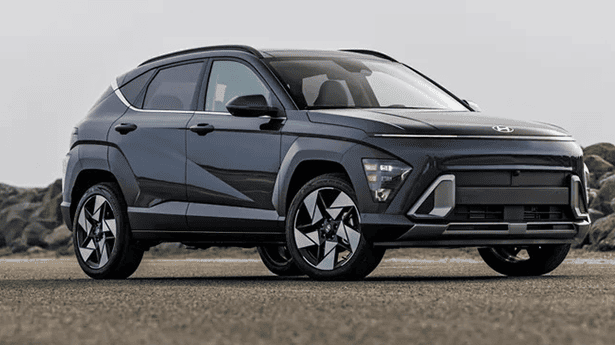
Buying HTRAC All-Wheel Drive is worth it for Ohio drivers who want dependable winter traction, seamless wet-weather handling, and minimal impact on fuel economy. Central Ohio averages between 22 and 28 inches of snow each winter, bringing unpredictable slush, freezing rain, and black ice to morning commutes. Hyundai's electronic multi-mode system automatically routes power where grip is highest, providing peace of mind during seasonal weather shifts without forcing you to drive a heavy, gas-thirsty SUV year-round.
Navigating Columbus winters requires a drivetrain that reacts in real time to slick road conditions. Front-wheel drive vehicles manage light snowfall reasonably well, but when ice patches form on highway ramps or slush accumulates in turn lanes, four-wheel torque distribution prevents unexpected wheelspin. HTRAC All-Wheel Drive monitors individual wheel speeds, throttle position, and steering angles hundreds of times per second. By actively sending torque to the rear wheels before front slippage occurs, it helps drivers accelerate smoothly onto snow-covered roads and maintain control during heavy rainstorms.
At Great Lakes Hyundai of Dublin, our team helps drivers compare variable-drivetrain options to find the perfect match for their daily driving habits. Beyond cold-weather traction, HTRAC enhances cornering stability on dry pavement by adjusting cornering power, making it a valuable system through all four seasons. You can check out our inventory of new Hyundai models online, stop by our showroom on Billingsley Road to test drive an AWD model, or give us (614) 782-1029 to discuss available trims.
Is All-Wheel Drive Necessary for Driving in Ohio Winter Weather?
All-wheel drive is not legally required for driving in Ohio winter weather, but it significantly improves low-speed traction, uphill acceleration, and overall vehicle stability on slippery roads. While a two-wheel-drive car equipped with dedicated winter tires can navigate light snow, all-wheel drive supplies immediate power distribution that helps drivers pull out of unplowed neighborhood streets, unpaved parking lots, and steep driveways without getting stuck.
Understanding how drivetrain mechanics interact with road surfaces clarifies what all-wheel drive can and cannot accomplish during winter storms:
- Acceleration and Launch Traction: AWD systems distribute engine torque across all four tires, drastically reducing wheelspin when accelerating from a complete stop on ice or packed snow.
- Cornering and Directional Control: Active torque vectoring feeds power to outer wheels during turns, helping maintain vehicle alignment through slushy curves.
- Braking and Stopping Distance: AWD does not shorten braking distances on ice because every modern vehicle uses four-wheel disc brakes regardless of drivetrain type.
For commuters negotiating I-270 during sudden winter snow squalls around Columbus, the primary advantage of all-wheel drive is maintaining forward momentum when traffic slows or stops on slick pavement. National Highway Traffic Safety Administration guidance emphasizes that proper tire tread and compound remain essential for stopping and steering control. Pairing an active AWD system with good seasonal tires delivers maximum safety for Midwest drivers. If you prefer exploring value-focused options, browsing our pre-owned vehicle lineup is a great way to find all-wheel drive capabilities across various model years.
What Is Hyundai HTRAC AWD and How Does It Work?
Hyundai HTRAC is an electro-mechanical, active on-demand all-wheel-drive system that uses electronic sensors to distribute engine torque variably between the front and rear axles. Unlike legacy mechanical systems that require wheel slip to engage, HTRAC constantly monitors vehicle speed, road surface feedback, ambient temperature, and driver inputs to preemptively transfer power before traction is lost.
Under standard highway cruising on dry roads, HTRAC operates primarily in front-wheel drive to maximize fuel efficiency. When sensors detect rapid acceleration, sharp cornering, or reduced surface grip, an electro-magnetic clutch pack inside the rear differential engages in milliseconds, transferring up to 50 percent or more of available engine torque to the rear wheels.
Selecting different driving modes through Drive Mode Select alters system behavior to match road conditions:
- Comfort Mode: Balances torque distribution for smooth acceleration and optimal efficiency during daily driving.
- Sport Mode: Directs more power to the rear wheels for responsive handling and agile cornering feel.
- Eco Mode: Focuses power exclusively on the front wheels during steady speeds to conserve fuel.
- Snow Mode: Modifies throttle response, optimizes gear shift points, and locks in a balanced front-to-rear power split to maximize grip on packed snow and ice.
Shoppers evaluating long-term reliability and ownership peace of mind frequently ask how electronic AWD clutches hold up over time. HTRAC systems are engineered for durability and carry Hyundai's 10-Year / 100,000-Mile Powertrain Limited Warranty, covering the internal gearsets, electronic actuators, and rear axle assemblies. Drivers looking for factory-backed protection can also explore our certified pre-owned Hyundai inventory to find late-model AWD vehicles complete with comprehensive warranty coverage.
How Does Hyundai HTRAC Compare to Subaru Symmetrical AWD?
Hyundai HTRAC differs from Subaru Symmetrical AWD primarily in operational efficiency and power delivery logic. Subaru uses a continuously engaged system that sends power to all four wheels at all times, whereas Hyundai HTRAC uses an active on-demand architecture that operates in front-wheel drive during steady highway cruising and engages rear-wheel power in milliseconds only when needed.
Comparing specs between comparable models like the 2026 Hyundai Tucson AWD and the Subaru Forester shows how these mechanical differences impact daily driving:
| Drivetrain Feature | Hyundai HTRAC AWD (2026 Tucson) | Subaru Symmetrical AWD (Forester) |
|---|---|---|
| Primary Drive Orientation | Front-Wheel Drive (On-Demand AWD) | Continuous Full-Time AWD |
| Fuel Economy (EPA City/Hwy) | 24 mpg city / 30 mpg highway | 25 mpg city / 32 mpg highway |
| Standard Engine Output | 187 hp / 178 lb-ft | 180 hp / 178 lb-ft |
| Driver-Selectable Modes | Drive Mode Select with Snow Mode | X-MODE Traction System |
| Powertrain Warranty | 10-Year / 100,000-Mile | 5-Year / 60,000-Mile |
Because Subaru keeps its drivetrain continuously engaged across both axles, it incurs slight continuous mechanical drag. Hyundai's HTRAC system reduces internal drag by decoupling the rear axle during steady highway driving, reactivating rear torque the instant sensors register steering input or throttle demand. Furthermore, Hyundai supports its drivetrain components with double the powertrain warranty coverage of its competitor, providing strong long-term value. If you are considering trading in your current vehicle for an AWD upgrade, you can check its current market value using our instant cash offer trade-in tool.
Common Questions About Driving a Hyundai HTRAC AWD
Q: Does Hyundai HTRAC AWD require specialized maintenance compared to FWD?
HTRAC all-wheel-drive systems require minimal additional maintenance beyond routine fluid checks for the transfer case and rear differential gear oil at factory-recommended intervals. Engine oil changes, tire rotations, and general vehicle inspections remain identical to front-wheel-drive models. Practicing regular tire rotations every 5,000 to 7,500 miles ensures uniform tread wear across all four tires, which protects the electronic clutch pack from unnecessary mechanical strain.
Q: How does HTRAC perform on wet roads and during heavy rain?
HTRAC active torque control continuously monitors tire grip and shifts engine torque to wheels with the highest traction, helping prevent hydroplaning on rain-soaked highways. When accelerating through standing water, the system instantly directs power rearward to maintain directional stability. This dynamic power transfer prevents front tire slippage during sudden downpours, giving drivers confident handling through spring and autumn thunderstorms.
Q: Can you drive a Hyundai HTRAC AWD in Snow Mode all winter?
Snow Mode is designed specifically for unplowed roads, packed snow, and icy conditions rather than dry pavement. While driving in Snow Mode on clear highways will not damage the drivetrain, it reduces throttle sensitivity and adjusts gear shift points to favor traction over fuel economy. For dry or simply damp winter roads, keeping the vehicle in Comfort or Eco mode allows HTRAC to automatically manage traction while preserving maximum fuel efficiency.
Q: Which 2026 Hyundai models offer HTRAC All-Wheel Drive?
HTRAC AWD is available across a broad selection of 2026 Hyundai vehicles, including compact and midsize SUVs like the Tucson, Tucson Hybrid, Santa Fe Hybrid, and three-row Palisade. Electrified models such as the IONIQ 5 also offer dual-motor AWD configurations that deliver all-weather traction paired with up to an EPA-estimated 290 miles of driving range. Availability varies by trim level, allowing buyers to pair all-wheel drive with their preferred features.
Q: Do I still need winter tires if my Hyundai has HTRAC AWD?
While HTRAC AWD greatly improves acceleration and launch traction on slippery surfaces, winter tires provide specialized rubber compounds that remain flexible in sub-freezing temperatures. All-wheel drive helps you go, but winter tires help you stop and steer. For drivers who frequently navigate deep snow, unpaved rural roads, or severe ice storms, combining HTRAC AWD with snow-rated winter tires offers the ultimate level of winter driving safety.
Prices and MSRP referenced in this article are estimates for informational purposes only and do not constitute an offer to sell. See dealer for complete details. Fuel economy estimates shown may differ from official EPA ratings and should not be relied upon as a guarantee of actual vehicle performance.